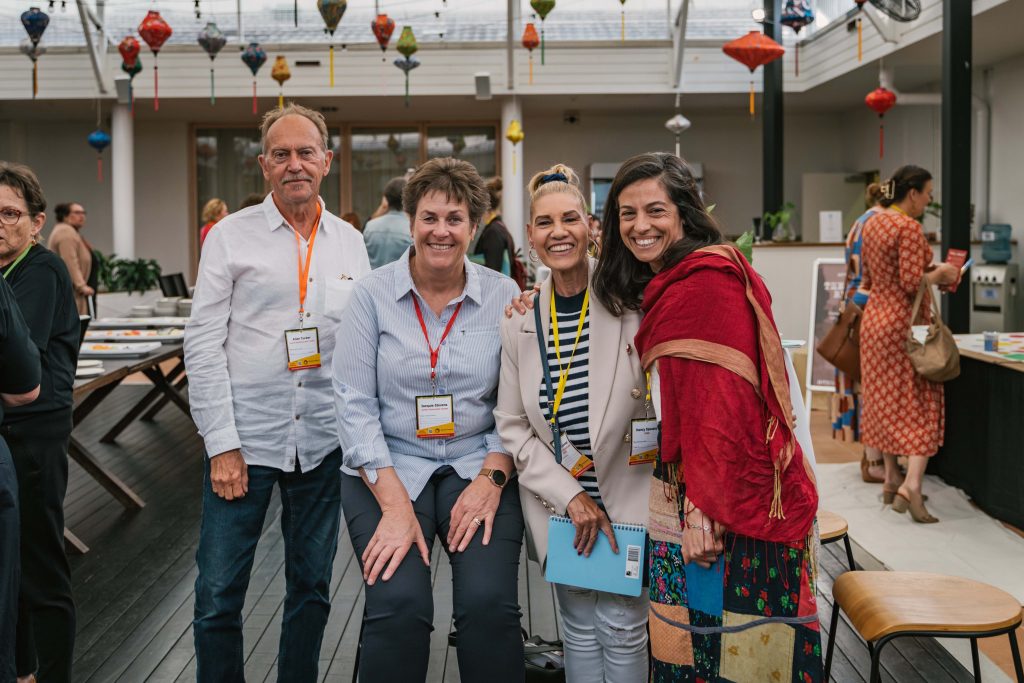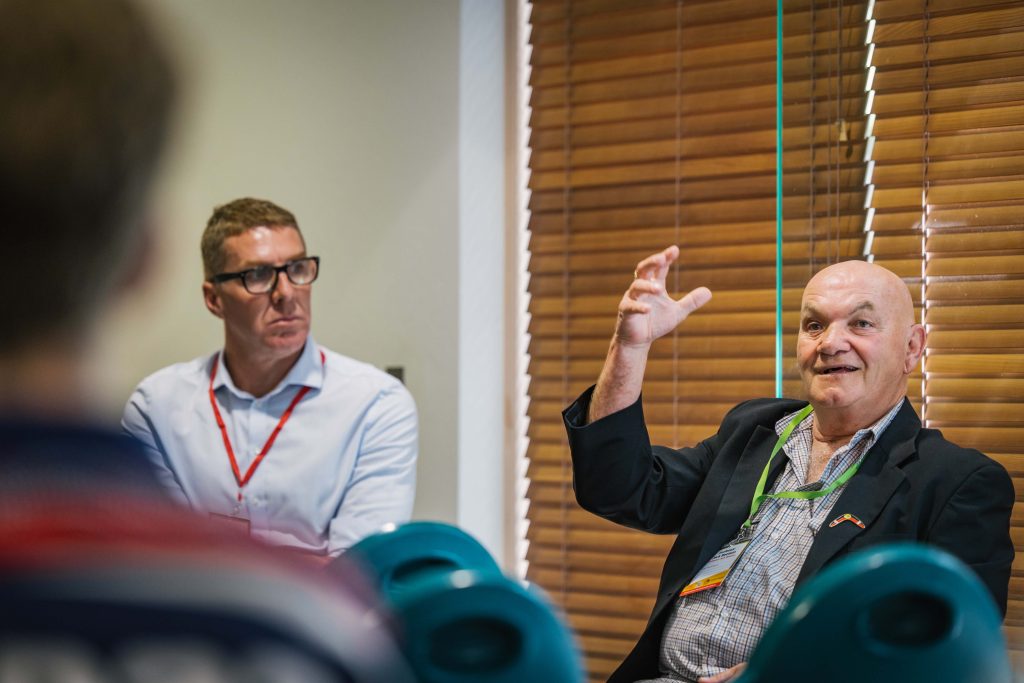
On Monday 2 November 2026 we held the first Place-based Research Convening, as a committment made in the Place-Based Research Forum held on Day 3 of Social Impact in the Regions 2026 in Stanthorpe. The Forum themes are in the white paper, What We Heard.
Who was in the room
Participants included community organisations or community development practices, university researchers, regional development bodies, consultancies, policy think tanks, and data companies. People joined from regional Queensland, regional New South Wales, Brisbane, Western Sydney, and Canberra.
The reasons people gave for coming fit the three expectations we heard at the Forum: to learn, to apply research in practice, and to scale what works.
Several people described a change in how they work. One came into not-for-profits focused on efficiency and has moved to “slowing down, moving at the pace of community”. Another, from innovation ecosystems, finds innovation systems in places “much more nuanced and fascinating than some of the textbook frameworks we’ve used over the last decade or so.”
Other references included data, evidence or measurement, focusing on who interprets or owns that data, and the need for first-hand insight alongside government and secondary data.
The definition of place-based remains a conversation, and includes people doing the work every day. One practitioner said: “We do place-based work all the time, and I find it really fascinating how we give all the different definitions and interpretations to the term place-based.”
Tim Reddel on 80 years of place-based policy
After the introductions, Professor Tim Reddel from the UQ Institute for Social Science Research provided a brief opening presentation. Tim co-edited Place, Community, and Governance in Australia: Past, Present, and Futures (Bloomsbury Academic, 2026) with Lutfun Nahar Lata. He traced Australian place-based policy from post-war community planning and the Whitlam-era Australian Assistance Plan, through locational disadvantage in the 1990s, to First Nations partnerships and collective impact in the last 20 years.
“It’s been evident in Australia since the post-war period, 80 years ago. It’s episodic and often reactive.”
He described the 1990s to the 2000s as “a bit of a lost opportunity … where I thought policy amnesia was strongly evident.”
On the role of government: “It’s a funder, a deliverer, an enabler. And sometimes a blocker to place-based change.”
On co-design: “We’re talking much more in policy speak about co-design and delivery. Perhaps more in the rhetoric than in the implementation.”
Tim warned of “a tendency, a danger, to conflate all place work into singular perspectives”. He set out a three-part spectrum from the book:
- Place-focused: government adjusts its programs to fit a local context.
- Place-based: several stakeholders collaborate to remove barriers, usually within one service system.
- Place partnerships: long-term, cross-sector, multi-government collaboration with delegated authority, pooled resources and shared decisions. Community leadership is at the centre.
He shared advice from a senior person at the Productivity Commission:
“You’re not going to find the successful program that can be scaled up everywhere. It’s about how … government comes in. Without all the solutions, come in to work alongside the community, bring data, bring resources, bring expertise. Value the local community needs.”
He closed by asking how we keep equity and disadvantage at the front of place-based work.
Tim’s session was followed by a recap presentation of the Place-based Research Forum at the conference.
Before the breakouts, Werner reflected on the two presentations:
“There is a bit of a tension between us trying to make sense of things … We try and distil it into something understandable, but at the same time, it’s important to realise that there might be different perspectives, different ways of being and knowing that we need to consider.”
Small group reflections
We asked each group three questions.
- What are your reflections?
- What are you doing now, and what help do you need or can you offer?
- What should a group like this focus on over the next 12 months?
Group 1: accountability and shared language
“How do you make sure what you’re doing actually serves the community?”
“Sometimes there can be this blocker of not wanting to share things so early, even though we know that sharing insights early is so essential to the process.”
The group suggested regular newsletters, and getting “some kind of report or document or artefact out earlier that you can then use as the thing that then sparks more conversation.”
On language: “Governments or others can use terms like place-based for their own particular purposes, rather than necessarily what is right for the community or to have the most impact.”
Group 2: scaling, missing voices and evidence
“The danger is that the government takes a cookie cutter approach to scaling up, and that can be a real risk.”
“Whose voice is missing?”
“How do we develop a better understanding of what place-based evidence means and is? And is not?”
The group reported “big general agreement about the focus on regional and rural”. They called for “taking that ecosystem approach to the work because otherwise we’ll end up with a very singular view and not taking account of the diversity.”
Group 3: assumptions, collaboration and learning
The group discussed the regional impact of national economic policy. They also discussed barriers to collaboration when starting work in a new area, and approaching those barriers “in a way that … is respectful and effective.”
On rural medical training: “How do we get the system to stop treating rural medicine as something that’s unsafe? Which, from our research, is a significant part of why it’s difficult to get rural doctors.”
On measurement: “There are so many assumptions made when we’re doing place-based work about what change needs to happen, or what impact looks like, and how we measure that impact.”
“Good practice actually looks like mistakes and learning and iterating from that learning. It’s not about the success or the impact and sort of tick box.”
For the next 12 months, the groups named accountability and sharing back to community, shared language, and more of these conversations.
What’s next
The next conversation will be on aiming for a short session in December, then January. I will send the outcomes from this session to the wider group. If you work in place-based research or practice in regional Australia, you are welcome to join. Register your interest at https://www.readycommunities.com.au/event/place-based-research-convening-2-developing-a-12-month-roadmap-for-place-based-research/.
Thanks to Tim for his time, to Werner for co-hosting, and to everyone who joined and shared.