All work in regions is inherently “place-based”, and some form of research is integrated into all place-based work. As such, place-based research is an important part of any conversation about social impact in regions. This conversation is not just the remit of traditional research institutions of universities, think tanks, and consultancies. Custodians of the conversation include those conducting the research, those contributing models and platforms for research, those benefiting and commissioning the research, and most importantly those who are the subjects of the research.
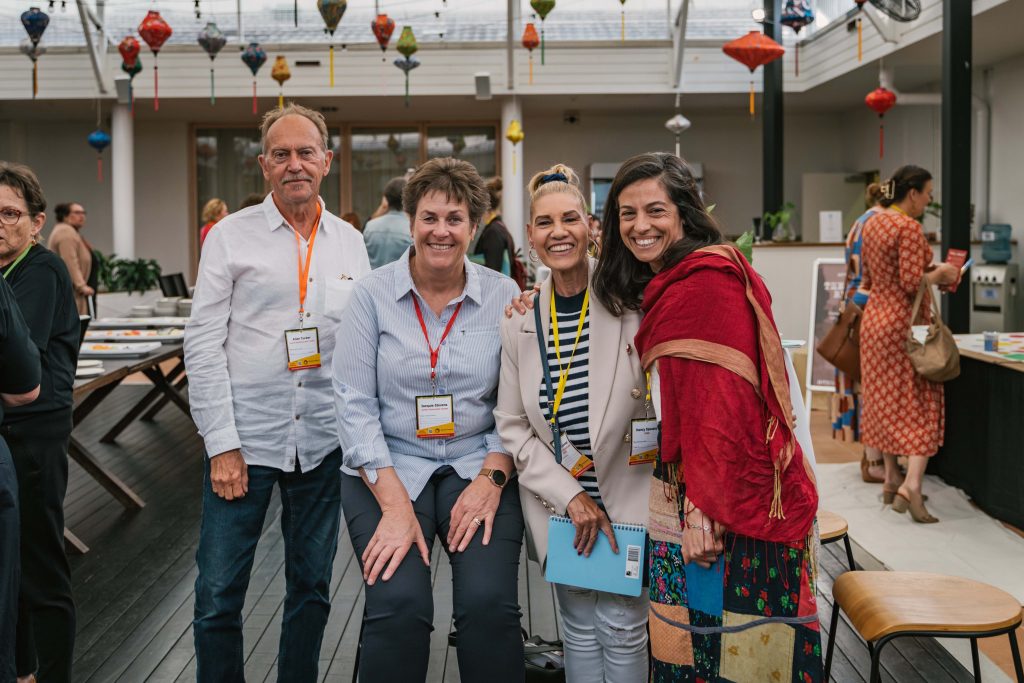
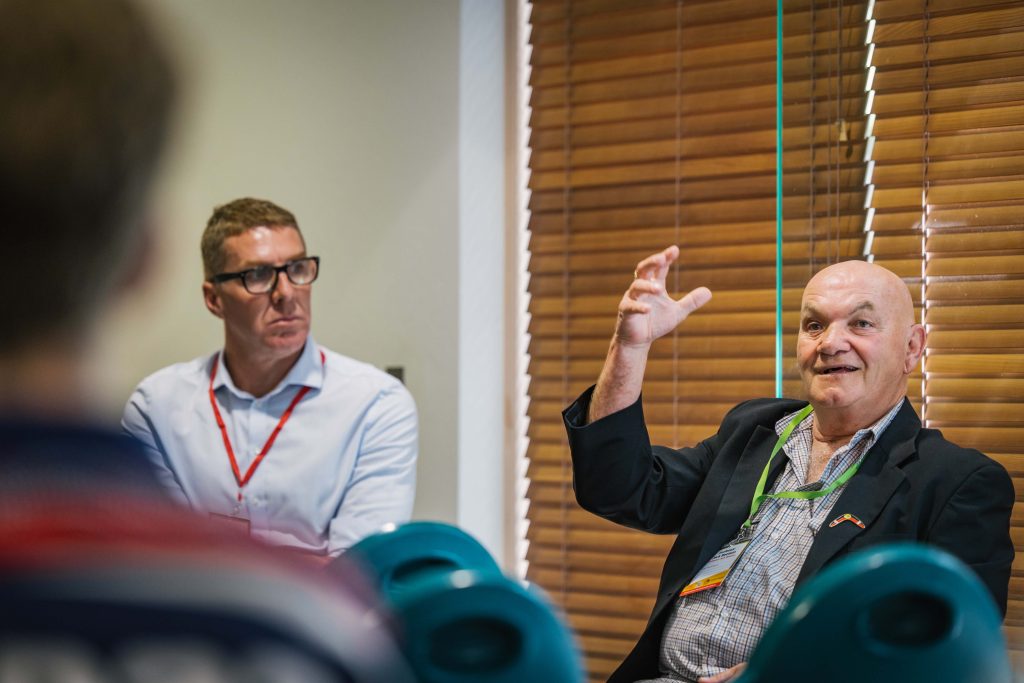
It is with this framing in mind that a Place-Based Research Forum was held on Day 3 of Social Impact in the Regions in Stanthorpe, Queensland, on 4 September 2026.
The outcomes from the session are captured in report: Place-Based Research Forum 2026 – What We Heard 1.0
The results will be reviewed in detail at the first webinar on 2 November, 2026. Register here.
Report Summary
What we learned from what brought people into the room
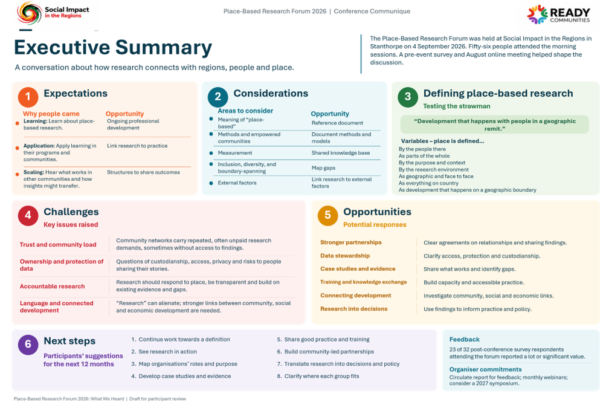
From the introductions, three themes emerged about why people came into the room:
Learning
“I’m here to learn from the experts in the room today and deepen my understanding of research.”
Many came into the room to learn from others and learn more about both place-based approaches and research in general. Participants came from working in regional communities as well as directly engaging in research. The intersection of the two concepts of place-based and research provides an invitation for those wanting to learn more.
Opportunity for the next 12 months: Offer ongoing professional development and shared learning on place-based research, such as the monthly webinars committed to at the forum.
Application
“How do we actually get the research part of place-based to inform the program?”
More than an academic exercise, people came with a desire to see how place-based research practically applies to their local community and their programs. This highlights the need for translation of place-based research in the social sciences.
Opportunity for the next 12 months: Link place-based research conversations to practical uses, with examples relevant to practitioners, policymakers, funders and community members.
Scaling
“What does it look like in other communities and how do I find those communities that [our model] can work, and then also make sure that the community is able to adapt it to what their needs are.”
Beyond application in their own community, participants wanted to hear what was working in other communities and how their research efforts might apply in other communities. Once research has been applied, there is opportunity to see how the research might be applied in other communities and contexts.
Opportunity for the next 12 months: Create structured ways to share outcomes and insights from one community with others, including how to adapt them to local needs.
What we learned about people’s considerations about place-based research
In their introductions, participants also included points to consider in place-based research.
The meaning of “Place-based”
“Place-based is a new term [I’m] learning about. We are government-funded, so I’m just really curious what place-based means to our program.”
Participants shared their personal reflections on the concept of ‘place-based’, which included the ‘what’ and ‘how’ of place-based work and different experience levels with research from initial understanding to practice.
Opportunity for the next 12 months: Develop an agreed reference document that sets out place-based concepts and terms for use by community, government and funders.
Methods and empowered communities
“I’m really interested in how research methodology or how academics work with community, and how that research empowers community to then translate for themselves, and not disempower them, or to be used by academics.”
The introductions highlighted a blending of the methods of place-based research, including empowerment versus extraction approaches, consultation fatigue, and the necessary social infrastructure to support research.
Opportunity for the next 12 months: Set out the difference between what place-based research is and how it is done, and document preferred methods for different purposes, including methods that empower communities and avoid repeat consultation.
Measurement
“Particularly interested in how we measure the invisible, and how we put some things around that to demonstrate that if you invest in the social infrastructure for places, do the work, and we can get upwards to scale.”
Research is inherently related to measurement and data, prompting reflections on what is measured and the related tools and instruments.
Opportunity for the next 12 months: Build a shared knowledge base for place-based measurement, covering methods, tools and datasets.
Inclusion, diversity, and boundary-spanning
“I’m really interested in evaluation and research in local communities and how organisations partner up and collaborate around that because there can be cross-sector work happening, but not all sectors are involved.”
A separate theme emerged related to ensuring all voices are represented in research and the opportunities for boundary-spanning across demographics, sectors, regions, and domains of community and economic development.
Opportunity for the next 12 months: Map who takes part in place-based research and who is missing across sectors, regions, and community and economic development, and invite those missing into the next conversations.
External factors
“We are a place-based organisation, but the place is often shaped by so many external factors. How do we understand? We need information data to understand how we should respond when all these external factors are coming. They could be disasters, they could be renewable companies, they could be something we don’t know about yet.”
Place-based research also considers and is applied to external factors impacting a community, including industry, natural disasters, and investment structures.
Opportunity for the next 12 months: Build a repository that links research to the external factors affecting communities, such as industry change, disasters and investment structures.
What is place-based?
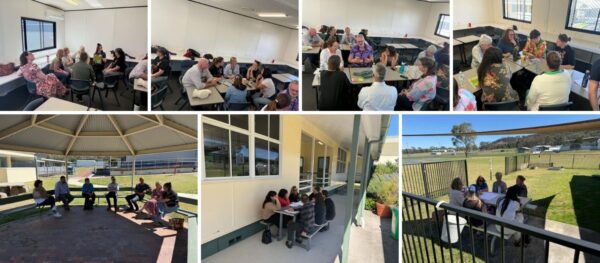
After the introductions, the session put forward a straw definition for the groups to test:
- “Place-based” is development that happens with people in a geographic remit. The definition focuses on what place-based is, as compared to how it is done.
The conversation acknowledged that the groups would not arrive at a definition in the time allowed, and the groups were asked to find the variables behind the different views.
Place is defined by the people there
“You can nurture them. You can guide them. They know what they know. You don’t know what they know. You’re there to learn from them. They’ll teach you. You’ve then got your frames that you can offer to them to help them improve and create their place of balance.”
A group emphasised place being defined by the community, including the geographic boundaries of the region. The role of place-based researchers being to listen, learn, and provide value with the frames inherent to researchers.
Place defined as parts of the whole
“We decided that [place-based] is about the Venn diagram of our community … everybody wanting to be distinct but connected. So we don’t want to lose our identity by having to be part of a whole.”
A group raised the notion that place is defined by what is seen as much as what is not seen, that it is the interconnected whole of the various parts.
Place defined by the purpose and context
“A place to me, well, when I’m at home, I’m a mum and a wife … And that’s my place … when I’m at work … that’s my place … when I’m in the street and I’m with my friends … that’s my place.”
A group shared how the definition of place-based depends on the purpose or context of those providing the definition. Like viewing through the lens of a kaleidoscope or the different identities a person has in their family, professional, or community roles, the definition of place can be contextual.
Place defined by the research environment, and research is defined by the project
“The place for us is the environment in which we are researching, but the research is defined by the project’s parameters and what we’re actually looking at within that place.”
A group reflected that what might be considered place by those doing place-based research depends on the research parameters. This opened the conversation to the concept of virtual ‘place’, while the scope of the conversation in the room emphasised geographic place.
Place is geographic and face-to-face
“… all people from different areas … we all came together for a collective understanding. So we put down that face-to-face happens with a collective understanding of the geographic area.”
A group emphasised that place and face-to-face are intrinsically connected and necessary for an understanding of the geographic boundaries.
Place is everything on country
“[A First Nations member of our group] … said, ‘Listening to you and everything you’ve said can be captured under everything on country.’”
A group with input from First Nations reflected that place is everything that happens on country, including the stories, histories, values, and beliefs.
Place-based is development that happens in a geographic boundary
“We focused on keeping it high level, the way you framed it. So we actually just dug into your definition and just added the elements that everyone has said. It’s development that happens [in] a geographic boundary as defined.”
A group reinforced the initial definition, with an emphasis on boundaries established based on the interaction of people with the land.
How is place defined?
The insights from the collective identified variables on how place is defined:
Defined by the people in the place (Groups 1, 4)
“It’s determined by the people that are in there.”
Defined by power, voice and participation (Group 2)
“Community voice being elevated to be heard by decision makers …”
Defined by boundaries, physical or virtual (Groups 3, 4, 5, 7)
“A place might not always be a physical geographical location. It could be an online gaming space.”
Defined by country, history and identity (Groups 1, 2, 6)
“Everything on country, the people, the stories, the histories, the values, the beliefs.”
Defined by purpose, context and perspective (Groups 3, 4, 6)
“If the purpose isn’t defined for the research for that place, then we’re just going to be lost …”
Challenges and opportunities
The afternoon discussion focused on challenges and opportunities with place-based research and next steps. Four themes emerged from the conversation:
Trust and the load on community
Community organisations are asked to open their networks to researchers and then may not have access to the findings. Participants proposed agreements that set out how the relationship will work and how results will be shared.
“It’s like what you’ve just traded on our relationship, which is good because we are trustworthy. But now we don’t have access to that. We don’t have the impact, and now we can’t do anything again because of this. And then if we are a little bit asking questions, we’re treated like we should be grateful that people are coming …”
Ownership and protection of data
Research requires data and produces data, which has value and can have unintended consequences. There can be questions as to individuals and organisations that own the data and are the custodians of the data – who controls data about a community, who decides who gets access, and how to protect people who share their stories?
“Access to the data that is gathered. The data is about the community. It is the communities. They need to be able to access it, and then it also needs to be accessed by government, by business, by random others, for the benefit of the community, not to use and abuse the community. And I don’t know how you put those guardrails in …”
Accountable research that builds on what is known
Research can be driven by external organisations as well as local communities. This raises questions as to how research is accountable to the originating place and people, if there is clarity in the method, and if it builds on earlier research and known gaps.
“Any research, place-based research, needs to be accountable to the place. I’m really taking away the importance of research being locally responsive and shaped by those community priorities. And again, it needs to be accessible to the people it concerns or involves … and that it’s mutually beneficial. The researcher gets something interesting, and the community gets something interesting and valuable.”
Language and links across community, social and economic development
The word “research” can put people off. Participants saw value in research on how community development and economic development connect.
“Sometimes I hear the word research and I shut down and I think oh no, I get this impostor syndrome. But actually, hearing things like storytelling and reframing these concepts in a way that’s quite accessible and easy to understand, I think, is important.”
What’s next?
In closing, the conversation considered what was needed to prepare for a convening in 12 months. Participants suggested:
- keep working towards a definition;
- see place-based research in action;
- map the roles and purpose of organisations;
- develop case studies and evidence;
- share best practice and training;
- set up research partnerships led by community;
- turn research into decisions and policy; and
- help each group see where it fits.
We will be reviewing these outcomes and more as we set up monthly webinars to review the state of place-based research and continue the conversation with others in the field.