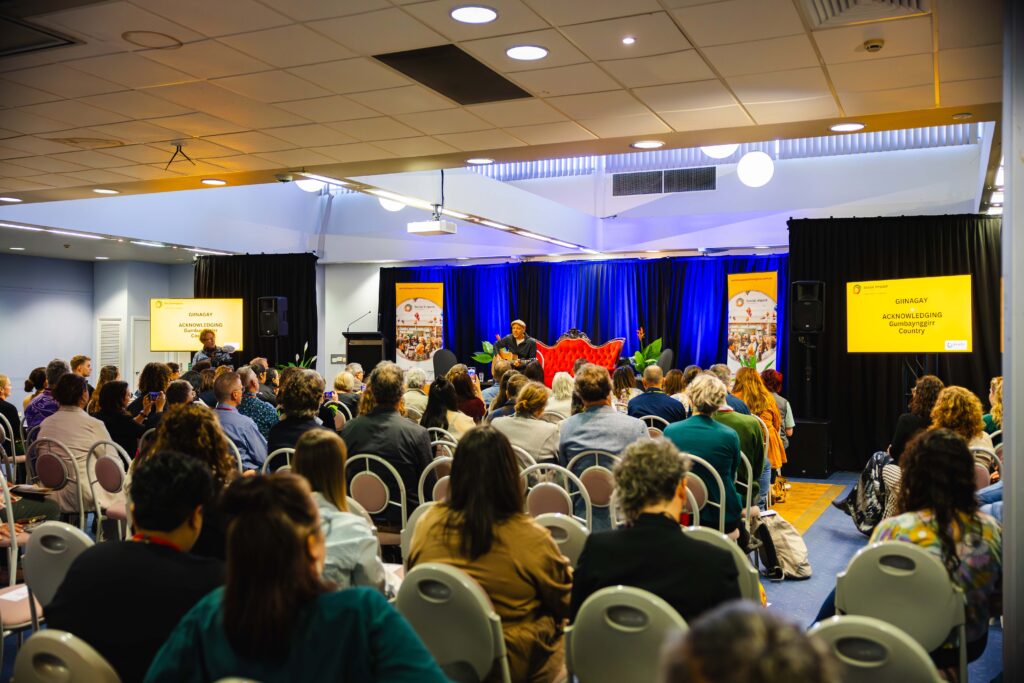
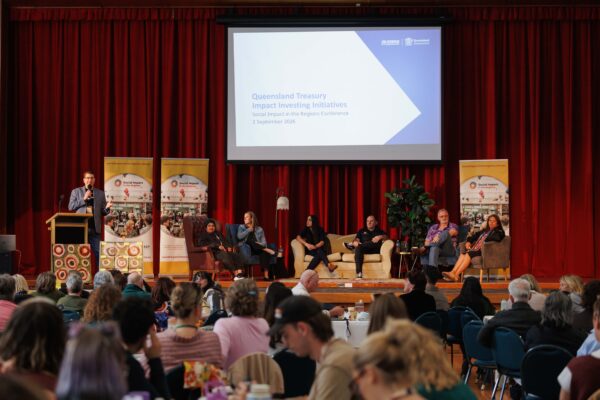
Day 1 of the Social Impact in the Regions conference moved from the systems conversation to the six 2026 Ready Communities National Regional Challenges. In May 2026, we asked people across regional Australia to contribute to a set of challenges informed by the work in Stanthorpe and priorities across Australia. This third panel session included a lead for each of the six challenges to set the stage ahead of the Impact Labs that afternoon.
Liveability. How does your region solve its own housing problem?
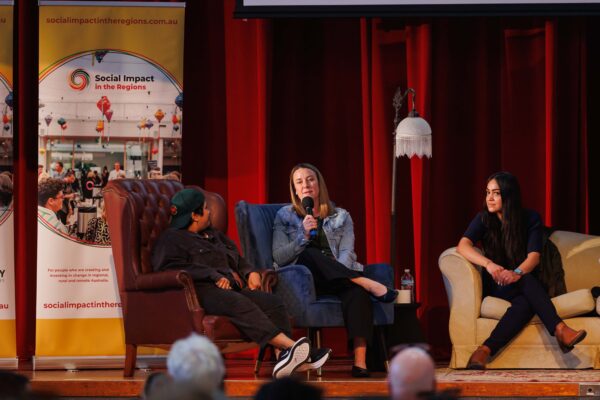
Bec Woolley described her work with Loreto Community Housing as a provider with around 3,200 properties across the state and just over 6,000 tenants. Bec acknowledged that a conversation about housing is more than just buildings: “Loreto is not just about building and managing homes. We have a strong community engagement and community programs arm of the business.”
The programs are built with tenants rather than for them: “The work that we do is about building capacity within the communities where our homes are. The big changes we see come from programs where communities have worked together.” Those include home improvement programs, social enterprise models supporting employment for young disengaged community members, wellbeing services, and sustainability programs to help tenants live safely and sustain their tenancies.
An opportunity Bec highlighted was working with community perceptions: “One of the major campaigns in housing is the ‘yes in my backyard’ campaign. Some of the biggest pushback we get is from communities around social housing in their area.” Bec reflected on how individual perceptions have collective impact: “We know the impact of not having social housing is young people don’t stay in the area, workforces can’t come into the area, and the elderly can’t age in place.”
Intergenerational connection. How do your region’s generations learn from each other?
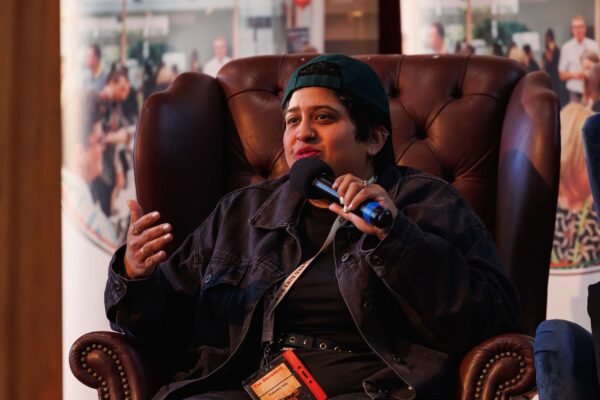
Talitha ‘Taz’ Devadass co-founded Futures Isle in Tasmania with Emilee Rigby, and the team also deliver the youth stream at Social Impact in the Regions. Taz shared about conversations that inspired their work: “Being young Tasmanians, very proud Tasmanians, not wanting to move out of our state, we kept getting asked, when are you going to move to Canberra, when are you going to move to Melbourne? We wanted young people to be able to stay in the regions and do the work that impacts Australia for the future.”
Taz connected the intergenerational challenge back to the earlier panel on the cost of this work: “We heard in the panel earlier that if you’re in social impact work, it’s really bloody hard. You’ve got to pay your mortgage. You’ve got to look after your family – the work doesn’t pay, and the funding dries up.” Futures Isle supports hundreds of young people already in social impact practice, and the conditions for them are harder again.
What those young people ask for is contact with people who have done it before: “They can be informed about politics, they can be informed about social change. But if they don’t learn from the lessons of those that have gone before them, we’re just going to recreate the same issues.” Aligned with the challenge of intergenerational connection, Taz reflected on assumptions from both sides: “There’s sometimes an assumption that isn’t something they want. If there’s an 80-year-old legend who’s been in social impact for the last 40 years, I can find 40 young people who want to hear from that person. And if someone is at the tail end of their career, wouldn’t you want to be paired with younger changemakers who want to tell you what they want to get involved in? The need is there. We’re just missing the opportunities for them to meet.”
Community contribution. How does your region keep its volunteer heart strong?
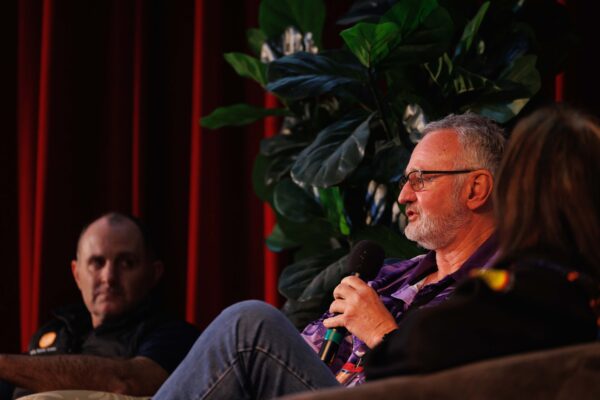
Des Schroder shared insights about the value of volunteers based on his work on the committee for the Grafton Jacaranda Festival. While the annual event is held in October each year, the engagement with local businesses, council, and community is supported by volunteers throughout the year. Des reflected on the significance of collectively leading the 93-year old Jacaranda Festival alongside a committee of eight: “Sitting on your shoulders and doing all that from those volunteers of the past is this heavy weight of the community.”
More than a one-off event, the festival connects the region through 26 events, all sponsored by local businesses with shared outcomes: “We’re all part of the same town.” Two Aboriginal women designed this year’s shirts and take a 5% return on the sales.
The model changed after a volunteer crisis around 2008, when festivals became more professional and volunteers could not commit the time. Des described the shift to business volunteering, where businesses run events using their staff. His example was Serco, which operates the largest prison in Australia near Grafton: “They’ve got 600 staff, and part of their responsibilities is volunteer hours. So they run a shop for us. The shop runs for four weeks. They order all their gear.” Prisoners approaching release help with the set-up, and the program has won awards. The in-kind contribution is worth around $100,000.
Highlighting the integrated nature of the volunteering and intergenerational connection challenges, the festival has strong youth engagement. A youth program recognised and sponsored from the 2025 Ready Communities program in Grafton is engaging 15 young people this year across catering, media and trades: “They then become the future of our volunteers to keep the festival going.”
Cultural practices. How does your region tell a story that belongs to everyone?
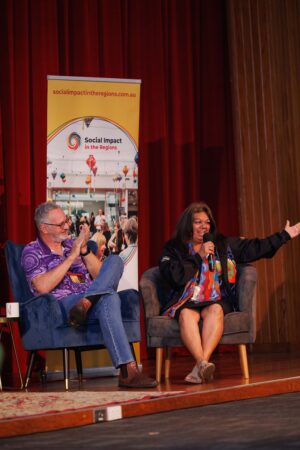
Aunty Vicki Taylor shared about telling stories of cultural practices through storytelling and singing, opening with an acknowledgement of Country and an explanation of why it is done: “That’s why we do welcomes to Country and acknowledgements, is to protect people. So our ancestors can come and take care of everybody. If you hear people say you’re welcome to country, it’s for your own benefit.”
Aunty Vicki described her role as a language teacher and leader, a proud Dunghutti woman, sixth generation, from the Macleay on the Mid North Coast, and an elder: “It’s a great honour to be an elder within your community. It comes with a lot of respect, and I get respect in my community because I give it. I don’t give it just to my own people. I give it to everyone in my community. We’re all one.”
She continued explaining how she did not grow up with her language: “I grew up not knowing my culture, my language, my storylines. It wasn’t until I came home to land and country that I got it.” She now teaches language, culture, stories, dancing and singing across three schools and a preschool, and teaches it to every child: “I don’t just give it to Aboriginal children. I give it to everybody, because everyone should feel this. There should be no segregation.”
Aunty Vicki told a story of a small boy in one of her classes. She had been telling the Dunghutti children that language and culture are their identity, and he called out that he was not Dunghutti: “He was really sad. I looked at his face, and I thought, you should never, ever have to feel like that. So I said to him, you live on Dunghutti country, therefore you’re a part of Dunghutti country. And this country is richer because you live here. And he had the biggest smile on his face, like he’d won the lotto. He was so proud that he belonged. And that’s like all of us. We should all belong.”
She went home that night, stayed up until one in the morning, and wrote a song in the Dunghutti language on the theme of being one and being many, then taught it to the children in the schools where she teaches. Then, guiding the conference delegation in practice, she taught it to the room and had the delegation sing it with her.
Local economy. How does your region keep its money working locally?
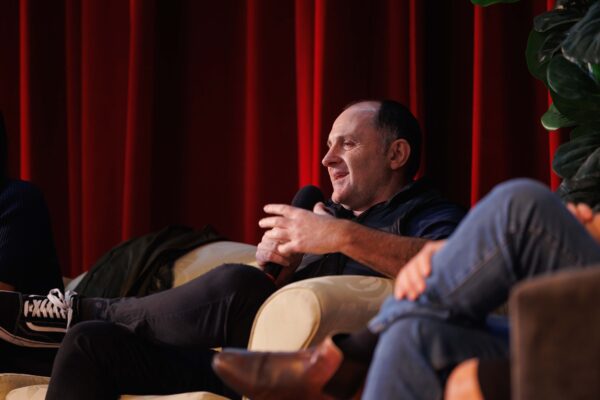
Ash Watt founded Why Leave Town with his business partner in Narrabri. The gift card program now operates in around 80 communities across Australia: “We create a program which is all about encouraging people to shop local. Anytime one of our cards is purchased or used, it has to be spent in the local businesses in that community.”
It started as a local alternative to individual cards at major brand stores and has expanded to direct capital into the local economy: “When you talk about drought, floods, bushfires, those relief funds that go into communities. When they are given in the form of one of our cards, it not only helps the person the funding is going to; they also spend it within that local economy.”
The approach provides a multiplier effect on the local spend: “$100 spent locally has about $180 impact on the local economy.” The approach continues to navigate shifting technologies, surcharges, and awareness. Why Leave Town is now preparing to launch a national platform so a funnel can be set up over every local government area in Australia: “When organisations need to funnel money into communities, they can do it through our system, and then they can double the impact of it.”
Sustainability. How does your region keep tourists coming when the water is running low?
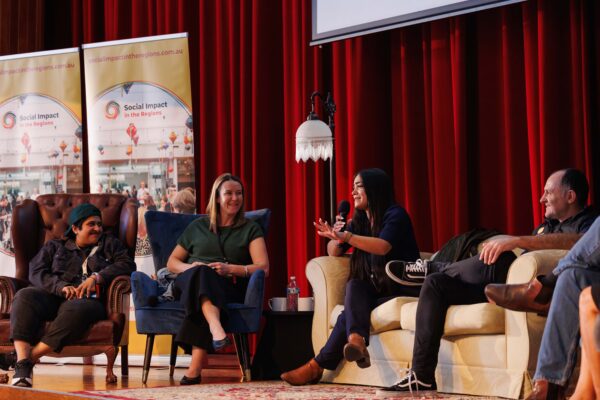
Maddy Razeghi is an Earth scientist at UniSQ working with the Southern Queensland Northern new South Wales Drought Hub, providing evidence and data on where the water is and how it can be managed. Her local conversation about drought has global inspiration and implications: “I was raised in a country which has been struggling with water scarcity for a long time, and the government doesn’t care, so I moved to Australia.”
Maddy highlighted how water sits underneath every other challenge: “Housing, keeping the community, protecting your community, all of your amazing activities and your local business, all of them need something. Water. If you don’t have water, you would not have any of this. Water is not only fundamental, it’s the space that everything else is sitting within.”
The first problem she encounters in communities is that the topic is avoided: “Water is always a political topic. People either don’t want to talk about it, or they don’t want to take it seriously, while we all need to start with a common evidence base.”
The Granite Belt has a specific version of the problem: “The landscape doesn’t retain the rainfall properly. The soil gets dry easily, and the surface water, which is the main source of water for this area, is very limited.” The consequence she asked the room to consider is both population and industry: “When water scarcity comes, we will have migration. People are going to go to the area where water is more. Community cannot be kept properly if there is no water.” She emphasised there was a need to understand what the region is known for – horticulture, wine and apples – and asked what happens if the conversation does not start early enough to protect them.
What could a community do in six months?
The panel conversation highlighted how each challenge area had distinct characteristics, while remaining interconnected as part of a wider system described in the morning’s previous panels. While each challenge was informed by local feedback in Stanthorpe, the panel’s diversity also highlighted how communities across regional Australia experience these challenges.
Each challenge representative was then asked to name one thing a community could do in six months. The focus was on what communities could do, given the default is often to wait for big answers outside individual control, such as water infrastructure, new housing and policy change. The aim was to understand where there might be local agency.
Bec Woolley on housing: “Locally, just looking at what can be done in terms of identifying where the gaps are, whether that’s dwellings that aren’t utilised or land spaces that aren’t utilised, and being creative about systems we can do in that place, working together.”
Taz Devadass on intergenerational connection: “30% of young people in Tasmania report feeling lonely all the time. What if the lucky country becomes the lonely country and we do nothing about it? How can you be someone’s uncle, someone’s grandkid? How can you create spaces that bring generations together? Events are happening, but we’re not necessarily seeing generations come to them.”
Des Schroder on volunteering highlighted that double-income households are now most households, people are retiring later, and retirees who do have time are mobile. “If you want to utilise that, you need some out there way of engaging volunteers when they’re in the community.” He pointed to the caravan parks near Grafton, the vans that come for the festival, and the grey nomad workforce already being used for fruit picking.
Aunty Vicki Taylor on cultural practices answered with the future: “We couldn’t do it in the past. We’re still struggling in the present. But our future is looking deadly, because we’re giving the culture, the language and the identity to our Aboriginal children so they can be powerful and strong, and giving it to the non-Indigenous children so they can understand. They’re going to grow up working alongside one another and understanding each other, and not being ignorant towards one another because they’re another culture or another race.”
Ash Watt on the local economy: “Our main tool is gift cards, but it’s a means to an end. The end is to encourage people to think about local businesses. Every time you make a purchase, whether that’s through your business or personally, first think, ‘can I get this locally?’ Give the locals a chance to come to the table. Sometimes they might not be able to compete on price or variety, but at least give them a chance.”
Maddy Razeghi on sustainability: “Mine is as easy as saying start the conversation. Don’t ignore water. Don’t put it aside saying we have water for now. We need that pool of shared knowledge for any future decision-making. Let’s start the conversation so that we all share knowledge of what the water situation is, where it’s sitting, what we should do.”